

18 Feb Building the Collective Capacity for Conscious Leadership
Building the Collective Capacity for Conscious Leadership
A Position Paper for the Leadership Forum Community
2023
The Leadership Forum Community convened for its 105th gathering at Silver Bay in the Adirondacks to focus on the theme of conscious leadership. It is a core theme that had emerged as a focus for the community in recent years as a critical stance in a fast-changing world filled with great challenges.
The Leadership Forum was first convened more than a century ago to host thoughtful conversations about leadership. Since then, the Forum has been a place to explore and advance thinking and capacity on the most pressing issues of the day. Early conference agendas addressed issues such as class struggle, collective bargaining, guaranteed minimum wage, experimentation in profit sharing, equal pay for women, and the abolition of child labor.
As we enter a new age of challenge and opportunity in the 21st Century, we believe that we can hold no greater agenda than conscious leadership. We live in an era of great potential where we now have the means to address many of the core challenges that have plagued human existence across the millennia – access to food, shelter, education, and healthcare. Yet, we face great new challenges – environmental collapse, global pandemics, social polarization, nuclear conflict, and the emerging frontier of artificial intelligence – that have the potential to threaten our existence. Addressing these threats hinges on our ability to transcend and collaborate across our identity and political differences. Conscious leadership is what we need.
The late Mark Johnson, who headed up the Leadership Forum for many years, wrote:
“Consciousness is awareness of one’s autonomy, of one’s agency in the world, that there are things that we do control and we need to be responsible for the control that we have. Those things are always embedded in a shared responsibility but we can’t sluff off our agency to anyone else. We’re the agents of what comes next.”
In this paper, we explore the concept of conscious leadership. Why it matters. And how we can develop the collective capacity for this kind of leadership.
What is Conscious Leadership?
Conscious leadership is a mindset and practice that involves being self-aware and considerate of others, understanding the interconnectedness of all aspects of reality, and taking responsibility for the impact of our decisions and actions on individuals, communities, and the environment. Conscious leaders value diverse, inclusive, and authentic expression, and they strive to foster a culture that cares about people and promotes learning and growth. They are mindful of their emotions and interpersonal interactions, seeking to understand themselves and learn from the world to effect positive change. – Leadership Forum Community Poll
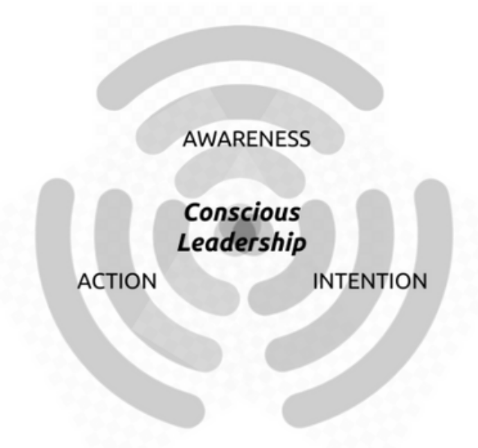
In essence, conscious leadership relates to three elements that intersect and ripple outward, creating greater waves of impact.
A court in Holland recently ordered Shell to reduce its greenhouse gas emissions by 45% below 2019 levels, by 2030. The court said that Shell violated basic human rights, particularly “the right to life and a secure family life” by not reducing its emissions. To comply with the court order, Shell will have to rethink its purpose and operations.
Our collective dream, if there is one, is not clear at this time, although I have a sense that a shared dream is emerging as we connect with each other. Our dreams are mostly individual and in competition with others. Rights are asserted more often than responsibilities are recognised. There is no dream that I am aware of that would unite us, that wouldcombine our talents, energy, and goodwill to create a society and a way of life that would inspire and satisfy most people.
Wendell Berry observed that early European settlers on the Great Plains had “vision but no sight.” Desperate to escape poverty and oppression and lacking the knowledge we have today, they tried to impose a dream on a land they did not understand. That forgivable lack of understanding led to heartbreak in the Dust Bowl of the 1930s.
To be conscious is to be aware. Awareness is both internal and external. The world within us encompasses our thoughts, emotions, beliefs, and motivations. While much of this is automatic and unconscious, this complex web of experiences, emotions, and beliefs drives our actions. Internal awareness is to hold a mirror to ourselves so we understand what and why we think and act the way we do. External awareness is about the world around us – extending from our interpersonal relationships and organizational interactions to actions in the wider world. In moving from unconscious reflex to conscious action, we open up the potential for choice and greater impact.
Consciousness calls us to be intentional about our behaviors and actions. This derives from a space of awareness of our values and the impact we might have through our actions. When our lives are guided by intention, we act from a place of purpose.
Intention and capacity don’t count much unless they are activated. Action without intention is rudderless. What we are able to do also depends on ability as much as intention and opportunity. Awareness and intention are catalysts for developing our capacity to be more of who we wish to be and achieve more. Development takes effort. Our motivation is the engine for the effort it takes to persevere to grow our abilities and overcome the obstacles that learning entails.
Why Conscious Leadership Matters
Conscious leadership fosters a kinder and more inclusive place for all. In a world in search of growth and advancement, it enables positive relationships, improves organizational productivity and sustainability, and elevates our collective impact. At a time when so much of our human and planetary future is at stake, it enables us to consider our greater impact on future generations and the wider world. – Leadership Forum Community Poll
Expanded Awareness: There are many layers and levels of awareness – from our sensations to our thoughts and emotions, to tuning into what’s around us and the people we engage with, and the systems and patterns that shape us and the world. We, individually, can only see part of the picture. And yet, we can also appreciate that we’re all connected and interdependent. This sense – of interconnection – shifts our understanding and actions. Awareness of our connection, the needs of others, and suffering and challenges in the wider world encourage us to take responsibility.
Awareness transcends the acquisition of information. A lot of conflict is fueled by bias and misunderstanding. It is clear that much of the separation and tribalism in the world is elevated by the flood of information we receive through social media and online mechanisms that promote filtered and distorted views confirmed by our own 3
biases. We are over-connected and under-related. When we have direct experience with others, we find that our perception changes. This applies to people in organizations and communities. Spending time with people who we don’t know and learning their stories changes how we think and feel about them. It changes our commitment to them. It fosters a sense of mutual belonging – when we appreciate what is common to us, we can be better prepared to value what makes us different. We understand that our futures are bound together.
The power of intention: Awareness informs intention. Purpose emerges from self clarity and provides us with a compass to help us navigate choice. With the abundance of options today, the floodgates of choice are wide open. Intention is not only a compass that guides us to what we should do, but addresses the why – our “North Star” or sankalpa, which means heartfelt seeking in Sanskrit. Having shared intentions is essential to us as individuals and in organizations. Humans crave meaning. Organizations that articulate a strong why for their existence, draw the people who are aligned with that mission and are committed to advancing that cause. The phenomenon of quiet quitting that is widespread in the world of work is an indication that many organizations are not adequately connecting people with purpose. The level of social discord and disconnection that is present today suggests that we don’t hold a shared sense of belonging or narrative about the future. With this, we are often pulling apart rather than pulling together. To get to shared agreements, we need to take a step back and do the human-centric work to connect and build shared awareness, understanding, and appreciation. This helps us value our diversity (of identity, experience, opinion, and more) and cultivate unity around the abundance of values and interests we hold in common.
Intentional action: At the heart of change is action. Action that is informed by awareness and guided by intention. Much leadership theory converges around the understanding that higher levels of leadership aim toward greater inclusion and integration. We seek to create thriving for all because we recognize that we are interdependent. Great leaders, such as Martin Luther King Jr., Nelson Mandela, Mahatma Gandhi, Ellen Johnson Sirleaf, and Jacinda Ardern, worked to enact inclusive change. MLK offered that we must hold each other’s interests: “Love is creative, understanding goodwill for all men. It is the refusal to defeat any individual.”
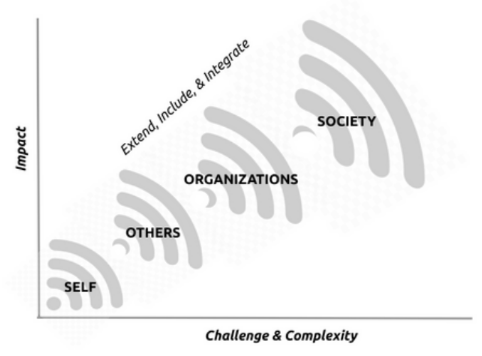
Leadership is greater than the role of positional leaders, organizational managers, or prominent political and social figures. Leaders may wield power and influence but they truly create greater impact as catalysts for collective action by others. In organizations and societies that thrive, we have shared belonging and commitments that leverage the value and capability of all.
How do we develop Conscious Leadership?
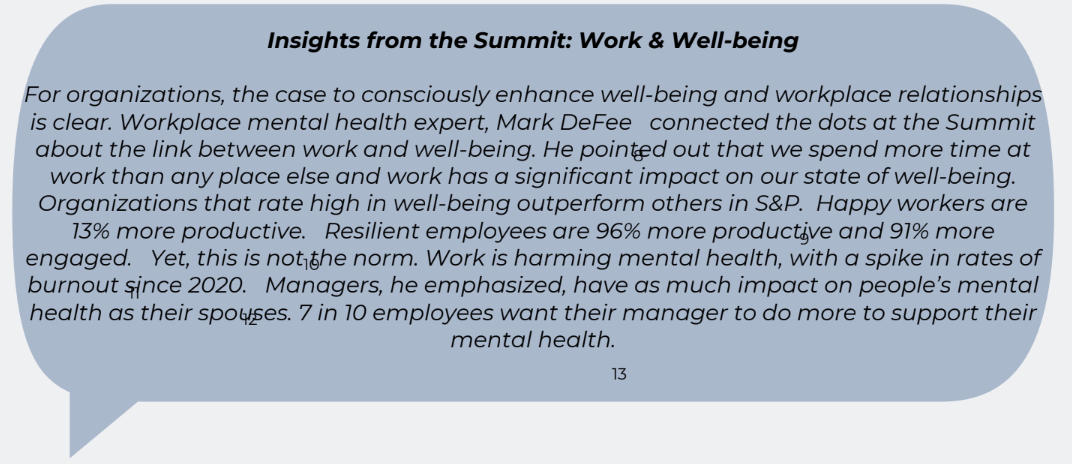
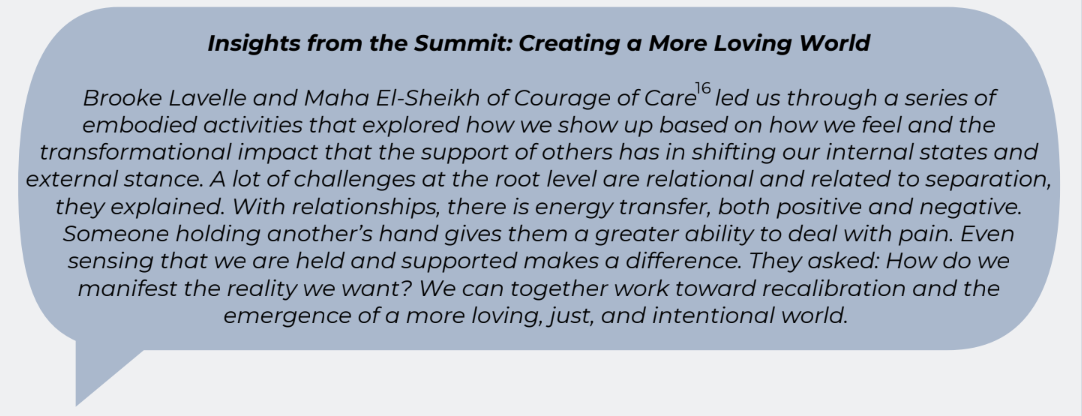
To advance conscious leadership in the world, we must individually and collectively take action. This involves embodying conscious leadership and engaging in continued dialogue across generations and geographies. Modeling values rather than just offering theories is important. We must focus on developing conscious leaders from a young age and institutionalize these practices within organizations. Ultimately, fostering a sense of belonging for all is vital in a future that will be transformed by technology. – Leadership Forum Community Poll
In understanding leadership as a collective practice, conscious leadership is about developing and enabling us all – not just a handful of exceptional leaders – to rise. This aims to the democratization of human development. The Nordic regions – which are consistently at the top of the places in the world for collective thriving – grew to peace and prosperity with the idea of bildung for their people. Bildung is the education and knowledge necessary to thrive in your society, and the moral and emotional maturity 1to be a team player and also have personal autonomy.
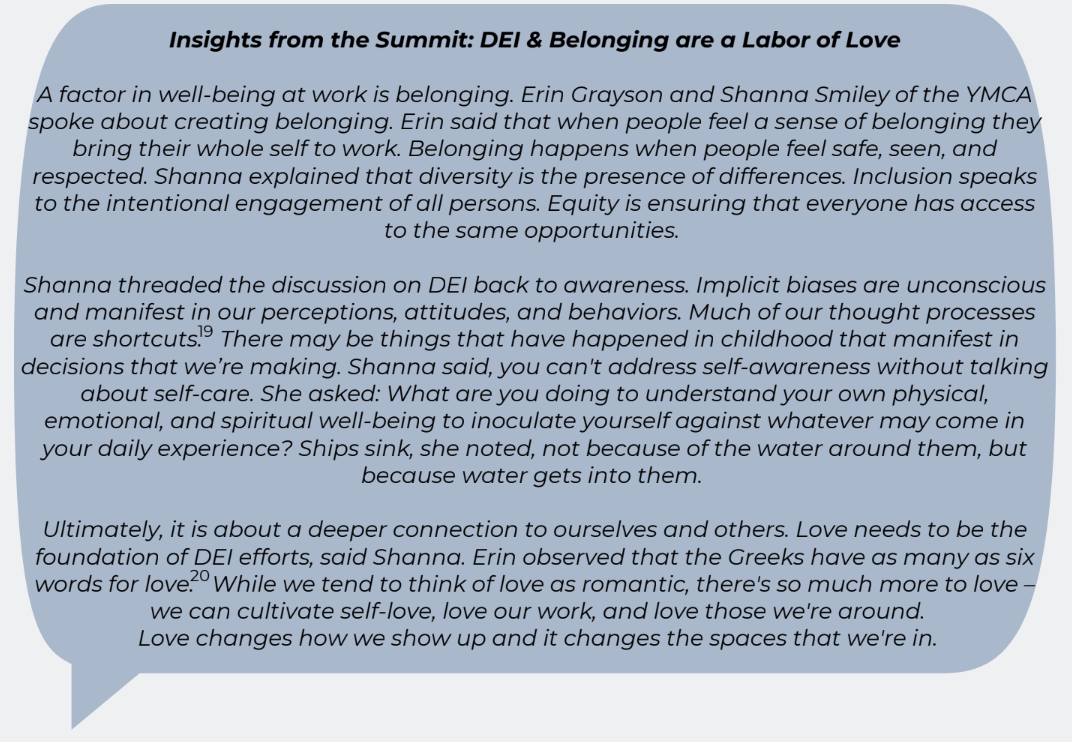
To create a collective capacity for conscious leadership, we need inclusive approaches that offer development at scale. We must each do our work or “walk the path” to quote the Buddha. This includes weaving inclusive development into the fabric of education and the learning and development we offer in organizations.
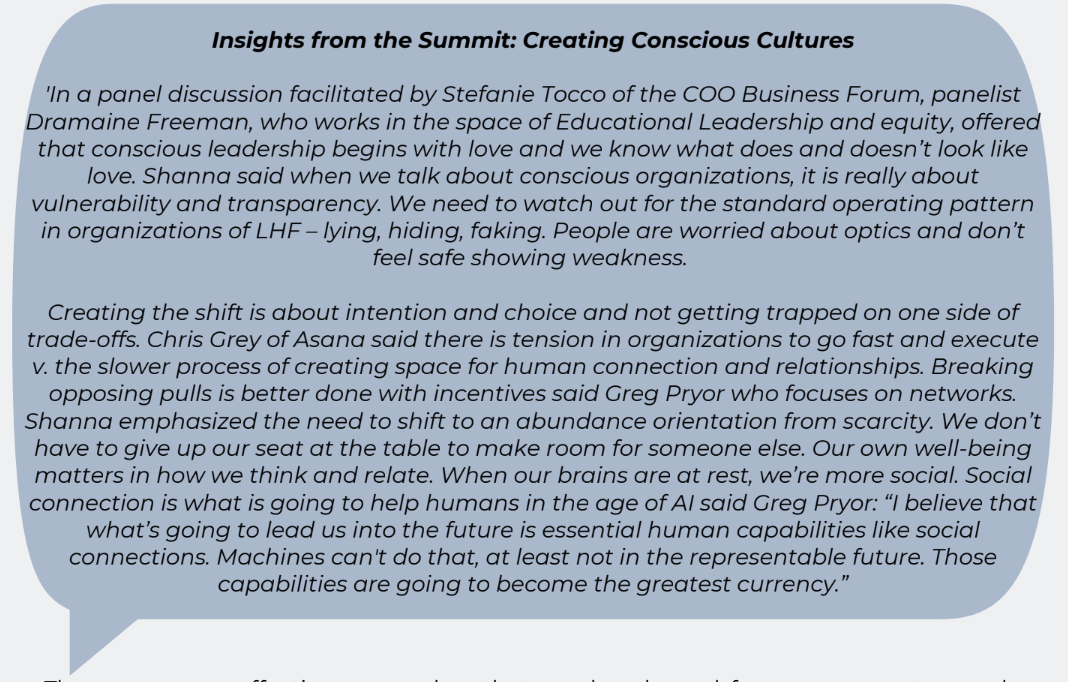
There are many effective approaches that can be gleaned from across sectors and human wisdom around the world. In Southern Africa, the tradition of Ubuntu calls us to acknowledge our unique dignity and value as individuals as well as that we all are part of interdependent collectives. The rapid adoption of AI into all facets of work and life will call us to shift our approaches but stay true to our values and intentions.
At the Leadership Forum Community, we aim to illuminate and share effective approaches – both established and emerging – so that they can be more widely used and adapted to advance conscious leadership and shape a more sustainable and thriving world for all.
