
18 Feb The Power Enigma
The Power Enigma
by Anne Hunnex
2021
The disruption experienced in 2020 and 2021 has given me new reasons to reflect on the impact of power on our ability to reimagine and rebuild after change and loss.
What is power?
We can’t see it, touch it, or taste it. But we definitely feel it and recognize it. It is something to be gained, given, usurped, and wielded. It can be bought and sold yet it isn’t a limited commodity. Power can come from wealth, cultural norms, position or title, physical strength, influence, attractiveness, and per sonality. It can be used for good or ill, for selfish gains or altruistic endeavors. The term power as discussed here is the possession of control, authority, or influence over others. Understanding and using power is one of the most complex challenges that leaders face.
Coming out of the past couple of years, we are faced with many areas where leaders are called upon to rebuild organizations, industries, and societies in different ways. Confronted with racism, immigration, climate change, war, and pandemic response, I see a common thread that limits humanity’s ability to respond in an efficient and collaborative way and it has to do with power. How can we gain insights into the enigma of power and find a way to use positive power to address these challenges?
Power and Discrimination
We all have biases. Biases are built into how our brains work. We need to make assumptions for our brains to work efficiently when taking in all the in formation available to us at any moment. The biases about other people are acquired through life, and may or may not be correct. When false or prejudiced assumptions have worn a biased groove in our brains, they become our go-to perceptions. It isn’t always easy to see our biases and changing them is even harder. To create a new bias or groove, we need to challenge our perceptions to ensure we are not judging others unjustly.
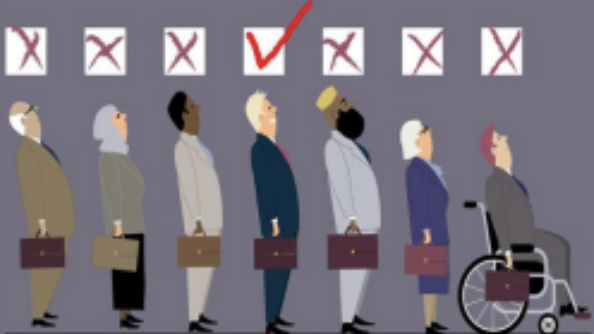
Our biases create problems is when they are accompanied by power.
A combination of power and bias leads to unjust domination of one person or group over another. This is the root of race, gender, and other types of discrimination. If I don’t like you, based on whatever bias I hold, it isn’t consequential unless I have power to exclude you or negatively impact your life. If I have a racial prejudice, I can only harm you if I have some power to limit your ability to get an education, earn a living, get health care, live safely, get housing, get a promotion, influence others, etc. If I have no power, my negative thoughts go nowhere. But with power I can keep you in a less powerful position. I can use laws, rules, influence, words, physical threats (including the use of weapons), and emo tional coercion to keep you in a less powerful posi tion. In addition, if I have an audience, I can influence others by generating fear and hate that will spread my biases to others.
Our culture determines how power is distributed. Culture also influences the biases that exist. Culture determines how women are viewed, how they are treated in marriages, what careers are acceptable, and what education is available. Culture deter mines how people of different races are perceived and treated. How is it that being darker skinned meant individuals and groups were less valued? This is a cultural distinction, not a biological one. Culture has had far-reaching impacts throughout history. The hate between groups in the Middle East goes back centuries and the reach of slavery in the U.S. has persisted since before the origins of the country. These prejudices are based on power. They are perpetuated to protect power that in turn protects self interests like land possession, religion, wealth, economic stability, or ruling group.
Power and Basic Human Rights
Denying people basic rights to live in safety and have adequate housing, education, and healthcare is one more way for the powerful to control those who have less power. By taking away the means for people to participate in society and use their talents fully, the powerful attempt to retain their power and wealth. The powerful manipulate their followers into believing in the biases that will keep part of the population in a less powerful position where they can be exploited.
In essence, the powerful can remove the gateways for those at the bottom of the power structure to move up the ladder. They do this by limiting where people can live, whether they can borrow money, the quality of schools they can attend, the jobs they will be considered for, and their participation in the political process. Unless these barriers are addressed on a large scale, people can’t gain enough power to change their lives.
On the flip side, unless we give all people the means and power to thrive, we are wasting the value that those individuals could bring to society. There is also the cost of supporting a population that is less healthy and less productive.
Power in Organizations
Anyone who works in an organization of any size knows that some people in the organization hold the power. Power is often conferred on those who have the highest hierarchical title. Then varying degrees of power are granted to those down the management chain.
The challenge in organizations is when too much power is centered in one person or a small executive team. There is a tendency for this group to make decisions that are only based on a limited knowledge or driven by a shared prejudicial belief. They start to believe they have all the answers and stop listening to others. This leads to hubris, which can be the downfall of leaders and organizations.
The best decision-making includes multiple perspectives from different departments doing the work and from different user or customer perspectives. How else can a company know whether their products and advertising are speaking to their intended customers? When more people provide input, solutions are more creative and can expand the reach or the organization. A more collaborative organizational environment also engenders more employee loyalty and engagement.
There are also people who seem to have power and influence even when they do not have a position of authority within the organization. These people gain their power by leading and gaining followers in various ways. Some people position themselves as leaders because of their expertise and others gain it by their attention to the needs of potential followers. Others demonstrate their leadership by their ability to bring together ideas and people to make the work easier or more successful. Regardless of their position within the organization, these people have power through their leadership, and they should not be ignored by those who have the positional power. When used to further the mission and goals of the organization, the leadership of these informal leaders increases overall organizational effectiveness.
Leaders in any group or organization need followers. Leaders can use power to coerce and demand compliance from employees, or they can use their power to build collaboration.
One of the fears of leaders is that sharing their power will diminish their own power or that someone else might become more powerful. In reality, the opposite is true.
Sharing power with subordinates only makes a leader more powerful, in most cases. As those who report to them are able to expand their influence through delegated power, they bring more influence to their leader.
Nationalistic Power
Power within countries is complex due to the many factions engaged in trying to gain influence and wealth through the structure of government. There are businesses/industries, religious groups (with their ethical concerns), environmental groups, racial concerns, and many other groups that are all pushing to gain dominance for what they feel is right or beneficial to them. People want to retain their power, and their wealth generated by power, to serve their needs. They are not always logical about the positions they are supporting but their biases are telling them that they are “right”.
Culture plays a large part in how governments control and use power. Whether a country is more of a meritocracy or more socialist is based on the culture that has developed over time. As our world be comes smaller through travel, blended economies, and real time communication, there are more out side influences affecting countries and cultures. It becomes more difficult for leaders to control the old ways and ideals.
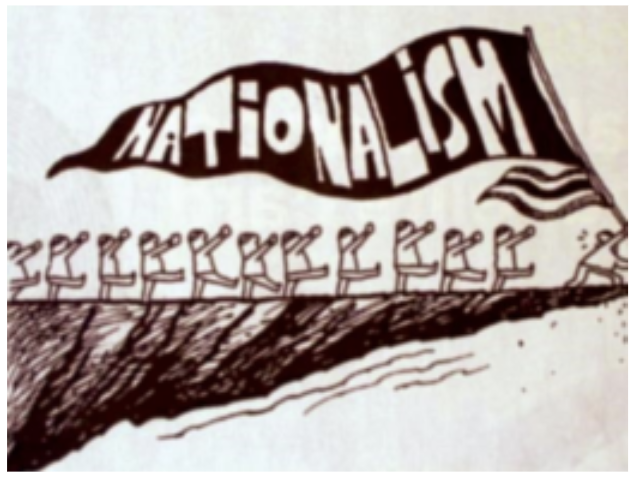
As leaders become more desperate to retain the past and hold onto their power and wealth, they be come more dictatorial and restrictive. For example, the U.S. has a historical tradition of a white, Christian majority that retains power. Recognizing that this perception is not the future (or even the present), is threatening to those that hold power and benefit from it. They see their perceived power slip ping away and in their innately self-serving nature they are not willing to share power. The inability to share power creates divides. The more people hold onto power, the greater the divide that eventually tears groups and countries apart. This can be seen today around the world and in history as well.
Power and the Environment
As a global community, we are also faced with the challenge of protecting our planet. More than any other area, global warming demands the use of the collective power of all people. As mentioned before, protecting power and wealth creates division. Overcoming the interests of those who benefit from and enjoy the lifestyles that contribute to glob al warming means challenging their power across governmental boundaries. Collaboration is the only effective way to approach controlling the sources of global warming.

Although survival instincts make humans innately selfish, we are also wired to establish relationships and collaborate. There is hope. All around us we see people performing generous, selfless acts. Even when their selfish nature comes out it can be useful if people realize that their current path will threaten their source of power. If the powerful begin to see that they will lose power and wealth by seeking to maintain the status quo, then they will look for new ways to retain their power. For example, they could switch to green energy if they perceive significant benefits. This will require a significant change and by nature people will fight to maintain current biases, beliefs and systems. Remember, through our bias, we believe we are right. Through education and in novation, we need to create a new collective bias toward clean energy.
Power and Leadership
Balancing leadership and power is a daunting challenge and responsibility. As leaders, we are granted power by our followers. It then becomes our responsibility to use that power for good rather than harm. In all the scenarios above, the common thread is use of power and the motivation behind it.
Leadership requires a willingness to share power to benefit the whole rather than the self.
We can use power to build up individuals and societies, or we can use power to control and limit others for our own benefit. The enigma of power is that it is not that the power itself is destructive; rather, it is the motivation behind the power and how it is used that determines whether it becomes beneficial or detrimental.
As a leader, the first step is to recognize that we are human. As a human being, we have an innate selfish drive that ensures our survival. Most of us don’t need to fight for survival in our daily lives, but that doesn’t mean that our innate selfishness doesn’t drive a desire to be better and get more than our neighbors. We strive for achievement, success, and wealth in a society based on competition and accumulation. Even if we think of ourselves as generous, caring people, mostly we still look out for ourselves first when it comes down to basics. Sometimes our generosity is even designed to make us look good in the eyes of others. We need to recognize that this is how we are all wired. That doesn’t mean we can’t care deeply for others and be willing to give up some of our benefits to see them succeed. It does mean that we need to acknowledge the competing drives within our brains and search to understand the motivations behind our actions, especially when exercising power.
We need to discover our biases. What are the beliefs that your brain automatically goes to that color how you see and react to the world? How do you perceive people? Are you objectively looking at people and their lives with empathy rather than judgement? Are you inadvertently making judgements or acting in ways that devalue others or limit their possibilities? This isn’t an easy task, because it’s often subconscious or accompanied by cognitive dissonance. It takes self-examination and a willingness to set aside your own selfish motivations.
Our actions are also governed by our values, what we believe to be good and moral.
If power is used to promote values that are not self-serving, then it can be a force for good.
People, religions, and organizations all have values. Values need to be clearly stated and defended so they can’t be corrupted by those who would use only the words and lose the intent.
As leaders we need to ensure that, as we make decisions and take actions, we are checking in with our values to ensure we are on the right course. Unfortunately, we are very good at rationalizing why we should deviate from our values or bend the meaning of our values when it suits our needs. Therefore, it is good to make decisions in a group that represents multiple perspectives. The group can then challenge thinking that might be self-serving and hold members of the group accountable to their values. Too often in organizations, values are not brought to the table when critical decisions are made. Then self interest and power take over and hijack the decision making process. Perhaps there should be an empty chair at the table labeled “Values” as a reminder that values should have a voice in each decision.
One of the responsibilities of a leader is to inspire others to action. As a leader, one source of power is to influence others and provide direction. This makes the responsibility of power that much greater. It is not just what we do as leaders but how we influence others, thereby increasing the impact of our actions. This is especially true when we are working with young people. Young people’s biases are still being developed and influencing their thoughts will potentially dictate their actions for years to come. Leaders should look for ways to influence young people to use power in a positive rather than a self-serving, destructive way.
Power is not a limited commodity. We can give others the power without decreasing our own power. We can listen to the perspectives and ideas of oth ers to enrich our own decision making. Sometimes there is a need to mentor and guide people, but that doesn’t mean we shouldn’t listen and consider their ideas for change. Guidance should be in the spirit of sharing power rather than using power to push in a specific direction. Often people, especially young people, will surprise us with their ability to use power in positive ways to accomplish goals.
Over the past two years, I have personally been challenged to look at my own relationship to power. I have learned much about injustices inherent in our U.S. judicial, healthcare, housing, banking, educational, and employment systems, despite laws for equality being in place.
I have never considered myself a powerful person, but I realized that I have been living with blinders on. Those blinders were designed to ensure that I protect my lifestyle of white privilege, and my beliefs about my country and society. When I remove the blinders and look at our society and world through a power lens, I see how destructive and self-serving power often is and how it limits the potential value that could be gained from a huge portion of the world’s population if they were not limited and controlled by the wealthy and powerful few. When I see the world through this lens and look at the challenges, both micro and macro.
I see the important role of leadership. My vision for leaders is for them to examine their sources of power and their motivations when exercising that power. That opens the door for sharing power, strengthening collaboration, and building organizations and societies that recognize and develop the value of all individuals.
Anne gains her energy from making change happen and working with people who have the vision and leadership to move an organization forward. Her focus on culture, leadership and team work comes from her project management roots. Anne spent her career building IT Project Management teams and PMOs in major financial services, insurance, and manufacturing organizations. In retirement, Anne supports the Leadership Forum Community as its Treasurer/ VP.